Peptide Testing: Hplc & Mass Specification Pureness Overview Pinnacle
Peptide Top Quality: Relevance Of Third-party Validation
In vivo tests review absorption, distribution, metabolic rate, and discharging (ADME) qualities, further Research Grade BPC-157 validating efficiency and safety and security. These screening services not just help customers enhance products precisely during growth however also give strong data sustain for regulatory compliance of peptide solutions. Beware of COAs that give a pureness number with no supporting chromatographic data, report pureness without specifying the analytical technique, or checklist a molecular weight without mass spectrometry confirmation. Tandem mass spectrometry (MS/MS or MS ²) fragments the peptide ions in the gas stage and evaluations the fragment masses. This is the gold standard for peptide identity-- it confirms both the structure and the sequence. For numerous peptide tasks, outright peptide quantity matters as high as chromatographic pureness.
Other spectroscopic strategies, such as Infrared (IR) or UV-Vis evaluation, are sometimes used for rapid top quality checks or architectural confirmation. This is why trustworthy providers offer both HPLC and MS data on their Certifications of Evaluation. Peptides in microspheres and nanoparticles might entangle with matrices, making it difficult to separate complimentary and encapsulated types. We make use of dialysis, ultrafiltration integrated with HPLC/UV techniques to scientifically assess encapsulation effectiveness and drug loading. These analyses are valuable when clients require more than a mass range and chromatogram to evaluate whether a whole lot is genuinely fit for quantitative job.Sample Preparation
It is one factor proper peptide storage space and reconstitution methods issue. Partial peptide fragments can result from insufficient synthesis or post-synthesis destruction. These fragments are generally smaller than the target peptide and may elute at various retention times.What The Contaminations Really Are
It's feasible to have a peptide that is, claim, 95% pure by HPLC and yet the internet peptide material is something like 70% of the powder's weight (the rest being water and salts). Don't be startled-- this is typical and is generally figured out by different evaluations (like amino acid analysis). Peptide pureness is most commonly identified by high-performance fluid chromatography (HPLC) Certificate of Analysis with a detection wavelength of 220 nm, which is optimum for detecting peptide bonds. This approach separates peptides from pollutants and measures both target peptides and contaminants, guaranteeing top notch samples for research study.Along with RP HPLC, our gifted scientists can additionally offer details on the molecular weight of peptides determined by mass spectrometry. Matrix-assisted laser desorption ionization time-of-flight mass spectrometry (MALDI-TOF MS) and electrospray ionization mass spectrometry (ESI MS) are the two most generally used techniques. This post is provided for instructional and research recommendation functions only. All peptides sold by Apex Laboratory are designated exclusively for in-vitro lab research use and are not for human usage. Peptide screening paperwork ought to be taken batch-level analytical evidence for research study product, not as clinical-use permission. Apex's Exactly how to Check out a Peptide COA guide goes through this process detailed.
The software application draws boundaries around each peak and calculates the location below. The pureness percent originates from comparing the area of the primary optimal to the overall location of all detected peaks. The majority of reports consist of a table listing each top's retention time, location, and portion of complete area. 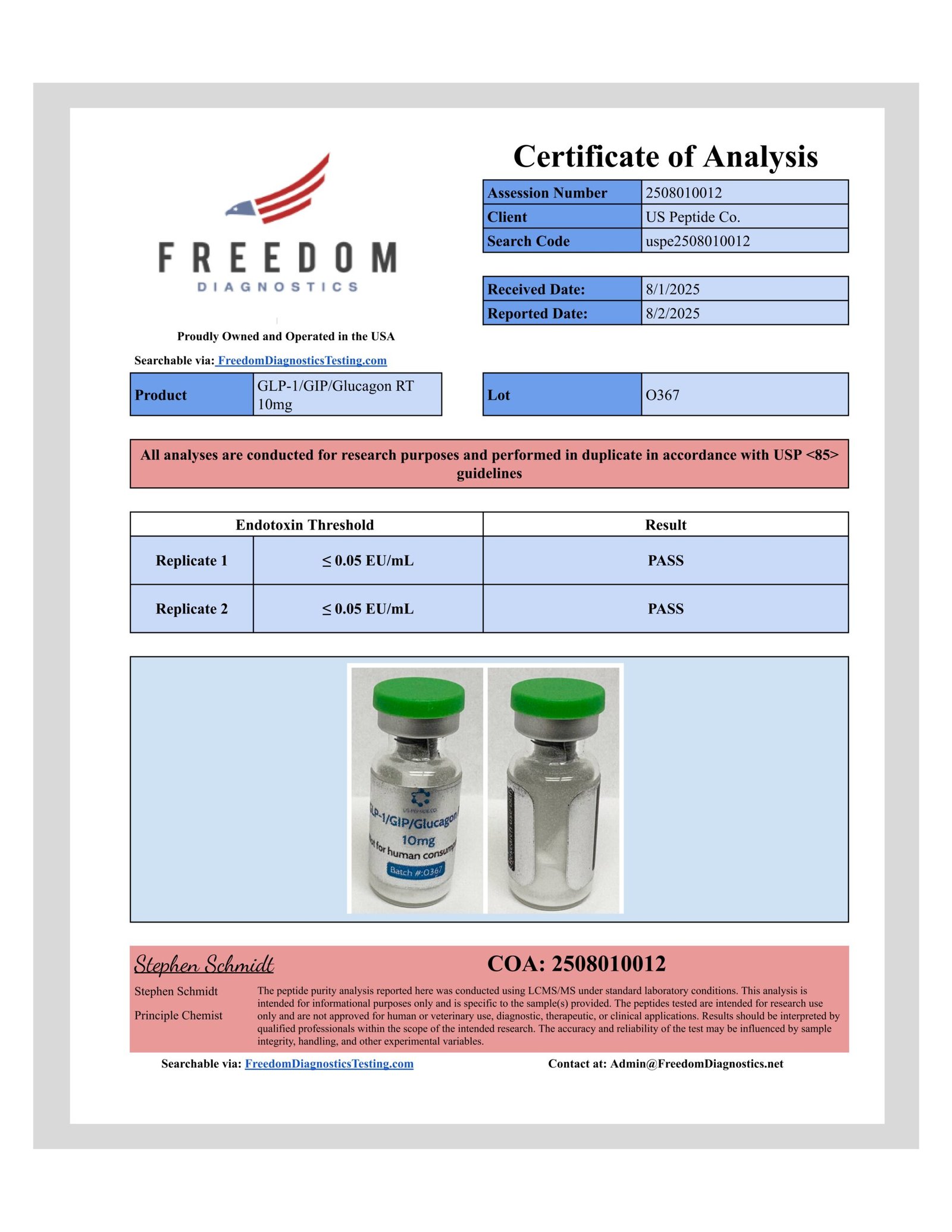
- One core technique is High-Performance Liquid Chromatography (HPLC), the gold criterion for assessing peptide pureness.
- Preserving a high level of purity is important due to the fact that impurities can affect bioassays or responses.
- The key analytical techniques for peptides consist of liquid chromatography (LC), usually HPLC, incorporated with mass spectrometry (MS) for accurate molecular weight decision and series validation.
- Apex's Exactly how to Read a Peptide COA overview walks through this procedure step by step.
- Armed with this understanding, you can confidently analyze tags like "95% purity, study grade" and make use of those peptides to drive your experiments without complication.